


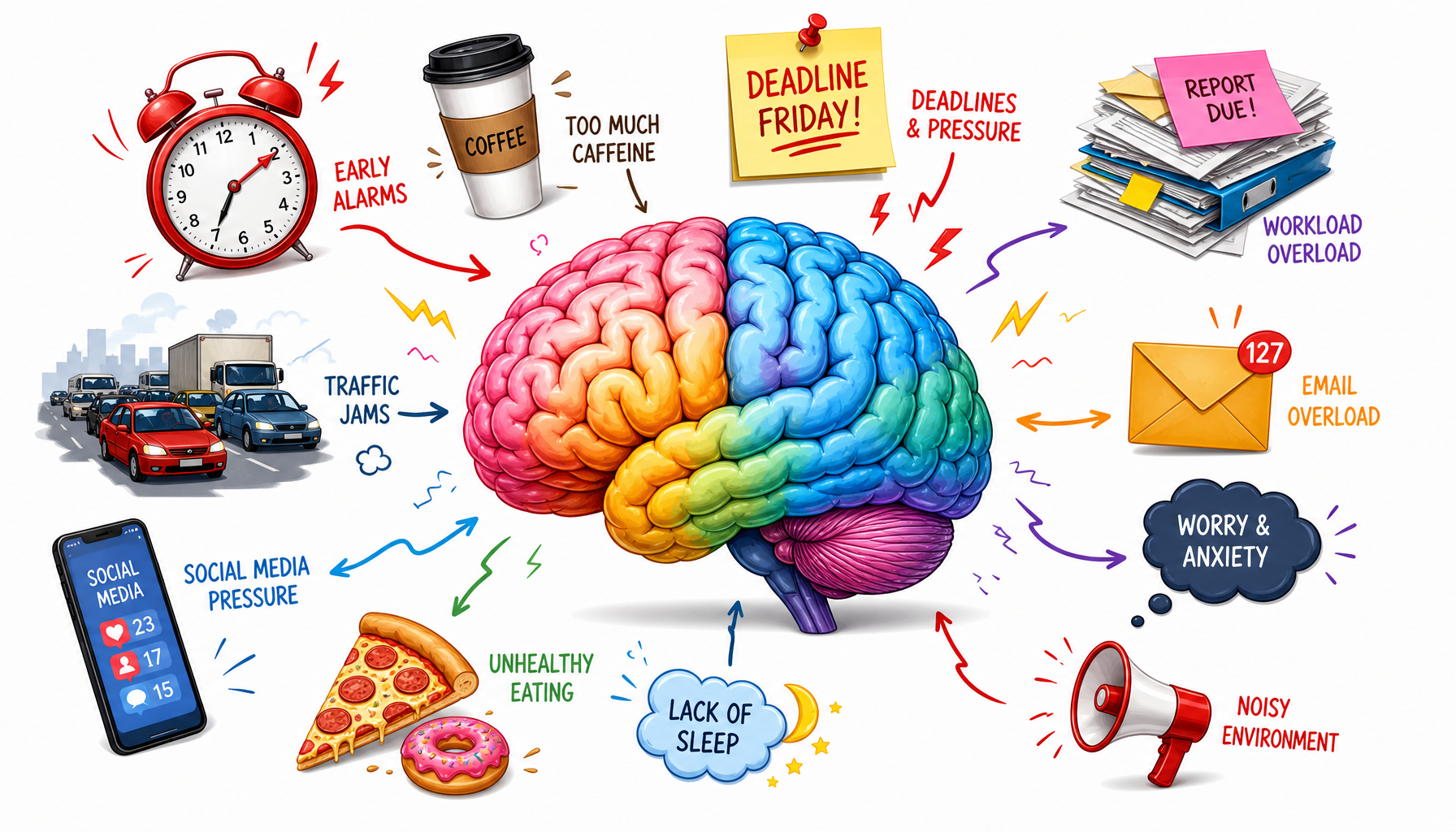
Stress isn’t just a feeling — it’s a biological cascade that damages nearly every system in your body. In Singapore, where 65% of office workers report high stress levels, understanding which illnesses are stress-related could save your health.
📊 The Numbers: How Stress Affects Singaporeans
- 62% of Singaporeans report that stress negatively impacts their work performance
- 1 in 3 young adults (18-34) experience stress-related sleep disorders
- ~10-15% of the population suffers from Irritable Bowel Syndrome (IBS), with stress as the primary trigger
- Cardiovascular disease kills ~6,500 Singaporeans annually — stress is a major contributor
❤️ Cardiovascular System: The Hidden Time Bomb
Chronic stress keeps your cortisol and adrenaline levels elevated, which leads to:
- Hypertension — persistent blood vessel constriction raises blood pressure
- Arrhythmia — stress disrupts autonomic nervous system balance, causing irregular heartbeat
- Increased heart attack risk — stress-induced inflammation accelerates atherosclerosis
- Takotsubo cardiomyopathy — “broken heart syndrome” mimics a heart attack and is triggered by extreme stress
Source: Singapore Heart Foundation — stress is the third most important cardiovascular risk factor after smoking and poor diet.
🧠 Nervous System: Brain Under Siege
Long-term stress literally shrinks your brain. Cortisol damages the hippocampus (memory center) and impairs neuroplasticity.
- Anxiety disorders — the most common stress-related mental health issue
- Depression — chronic stress depletes serotonin and dopamine
- Sleep disorders — insomnia affects 1 in 3 Singaporeans at some point
- Chronic tension headaches and migraines — tight neck and shoulder muscles trigger pain
- Cognitive decline — brain fog, poor concentration, memory lapses

🍽️ Digestive System: When Your Gut Knows You’re Stressed
The gut-brain axis means your digestive system is highly sensitive to stress. Common stress-related digestive issues in Singapore include:
- GERD (Gastroesophageal Reflux) — stress increases stomach acid, and spicy local food makes it worse
- IBS (Irritable Bowel Syndrome) — affects 10-15% of Singaporeans; stress is the #1 trigger for flare-ups
- Peptic ulcers — stress impairs mucosal protection in the stomach lining
- Appetite disorders — stress eating or stress-induced loss of appetite
💪 Musculoskeletal System: The Body Armor Effect
When stressed, your body unconsciously tenses muscles — especially neck, shoulders, and jaw. Over time, this causes:
- Chronic neck and shoulder pain — Singapore’s #1 workplace complaint
- Temporomandibular Joint (TMJ) disorder — teeth grinding and jaw clenching during sleep
- Lower back tension — stress amplifies existing back problems
🛡️ Immune System: When Defense Becomes Weakness
Cortisol suppresses immune function. Chronically stressed people get sick more often and recover more slowly:
- More frequent colds and respiratory infections
- Slower wound healing
- Worsening of autoimmune conditions (eczema, asthma, psoriasis)
- Increased systemic inflammation — linked to nearly all chronic diseases
🌿 TCM Perspective: Why Stress Makes You Sick
Traditional Chinese Medicine views stress as disrupting the flow of Qi (vital energy) through the body’s meridian system:
- Liver Qi Stagnation (肝气郁结) — the most common stress pattern. Symptoms: irritability, sighing, chest tightness, PMS
- Heart & Spleen Deficiency (心脾两虚) — from overthinking and worry. Symptoms: insomnia, fatigue, poor appetite
- Kidney Essence Deficiency (肾精不足) — chronic stress depletes deep energy reserves. Symptoms: lower back pain, tinnitus, premature aging
At San He Tang (三合堂), TCM physicians use tuina massage, cupping, and herbal medicine to restore Qi flow and rebalance the body. Tuina relaxes knotted muscles and calms the nervous system; cupping draws out stagnant energy that builds up under stress.

✅ Evidence-Based Stress Management
Here are proven strategies that work for Singapore’s high-pressure lifestyle:
- Diaphragmatic breathing — 4-7-8 breathing (inhale 4s, hold 7s, exhale 8s) activates the vagus nerve and lowers cortisol instantly
- Regular tuina massage — weekly sessions prevent stress from accumulating physically
- Sleep hygiene — no screens 30 min before bed; aim for 7-8 hours
- Cut caffeine after 2PM — caffeine stays in your system for 6+ hours
- Foot soaks before bed — warm water + acupressure on Taichong (LV3) and Shenmen (HT7) points calms the mind
📋 Your Daily Anti-Stress Checklist
| Time | Action | Duration |
|---|---|---|
| 🌅 Morning | Stretch + deep breathing before phone time | 5 min |
| 💼 Lunch | Walk away from desk — 10 min outdoor walk | 10 min |
| 🧘 After work | Neck stretch + shoulder release | 10 min |
| 🌙 Bedtime | Phone off, read or foot soak | 20 min |
🔔 When to seek help: If stress symptoms (fatigue, headaches, chest tightness, poor sleep) persist for more than 2 weeks, visit San He Tang for a TCM body constitution assessment. Professional tuina and cupping can address the root cause — not just mask the symptoms.
📞 Contact Us
📍 Boon Keng:34 Whampoa West, #01-71A, Singapore 330034 | 📞 +65 8191 2134
🕐 Hours:Daily 10AM – 9PM
📍 City Hall:1 Coleman St, The Adelphi #B1-46, Singapore 179803 | 📞 +65 8764 9422
🕐 Hours:Daily 10AM – 9PM